2nd European Assembly for a Just Building Transition
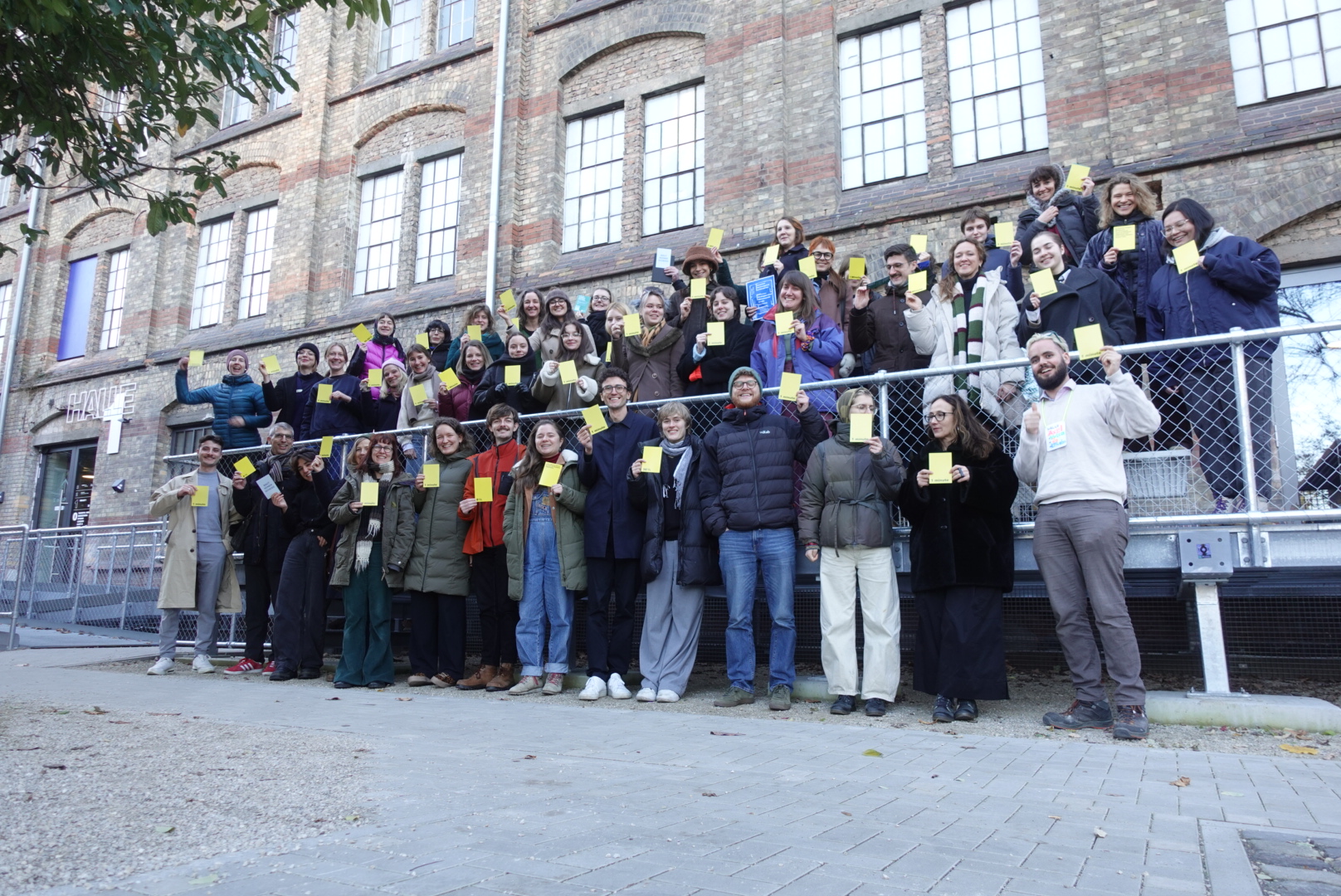
The 2nd European Assembly for a Just Building Transition took place in November 2025 in Frankfurt am Main as an in-person follow-up to the online Assembly held in July.
The 2nd European Assembly for a Just Building Transition took place in November 2025 in Frankfurt am Main as an in-person follow-up to the online Assembly held in July. Bringing together initiatives, activists and professionals from across Europe, the Assembly focused on deepening relationships, sharing concrete experiences from local struggles, and collectively exploring how European collaboration could move FROM EXCHANGE TOWARDS ACTION.
GUIDING QUESTIONS DURING THE ASSEMBLY
- What do movements need from one another?
- What patterns or tensions do we see across the groups?
- Are we building towards something collective, or is diversity our strength?
- What are realistic next steps and what do we actually want to take forward?
COLLABORATIVE LABS
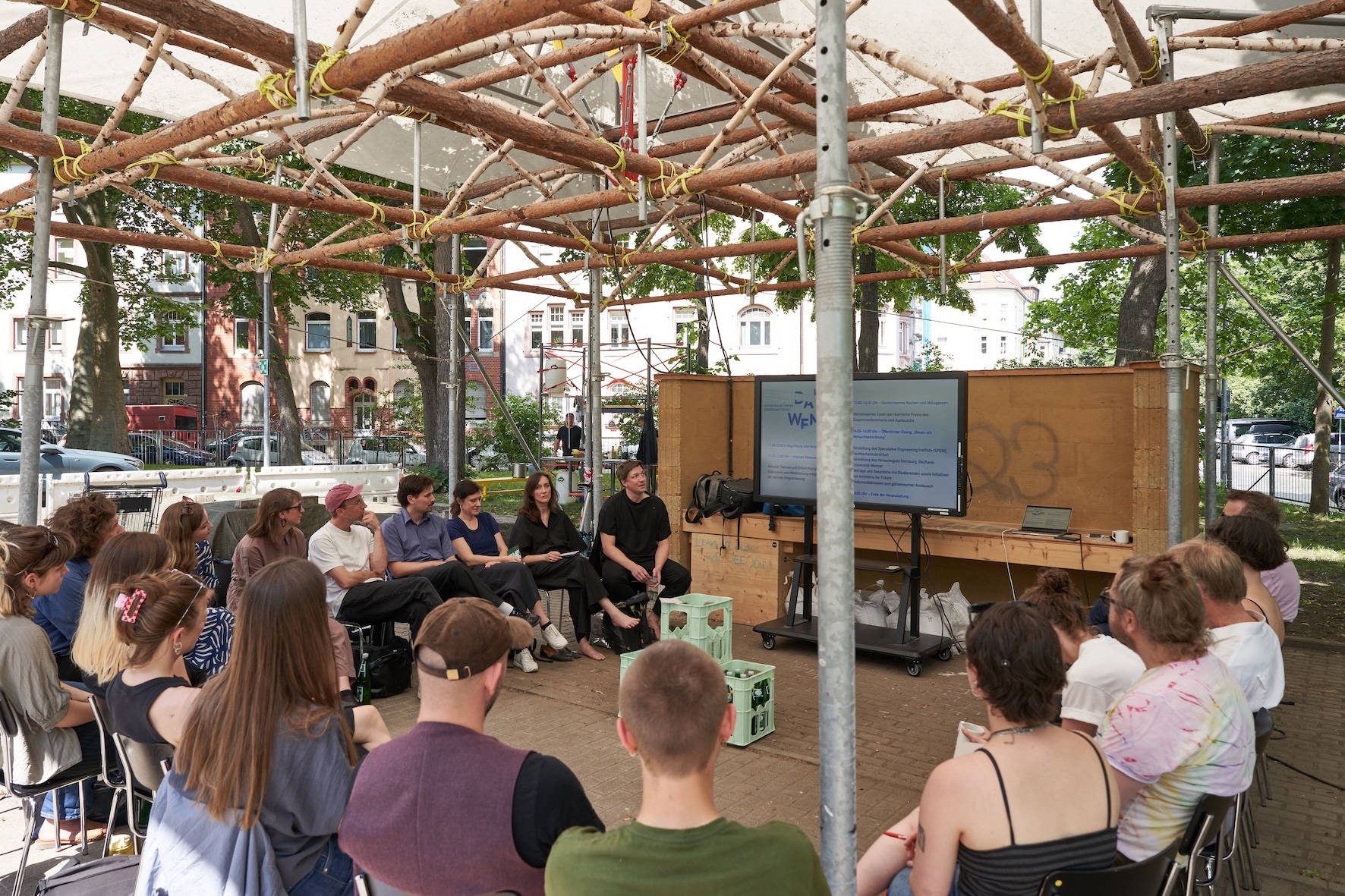
The programme combined inputs from a wide range of initiatives with facilitated discussions and collaborative working formats. Participants reflected on questions of visibility, resources and capacity, as well as on the challenges of sustaining engagement beyond individual campaigns or events.
In the afternoon, the Assembly was structured around three thematic clusters:
- CONCRETE ACTION: exploring what coordinated actions could look like in the short and longer term.
- POLITICAL DIRECTION: discussing whether and how shared demands or statements could be developed at a European level.
- MOVEMENT BUILDING: focusing on long-term collaboration, care, coordination, knowledge-sharing and funding structures.
Rather than aiming for immediate consensus, the Assembly created space to articulate open questions, tensions and shared ambitions. Outcomes included the formation of working groups on political demands and concrete actions, as well as the shared understanding that continued in-person exchange and follow-up processes are essential for building lasting European collaboration.The Assembly was co-designed with an international concept group and marked an important step in moving from initial connection towards more sustained forms of collective work.
The programm of the assembly can be found here.
HOSTS
The Assembly began on Friday evening at KOLLE, a collectively organised housing project and part of the Mietshäuser Syndikat. The space provided a grounded setting to arrive.
The full-day programme on Saturday took place at the 2. FLOOR (2.OG) DONDORF DRUCKEREI, a former printing house whose preservation was made possible through civil society mobilisation. After the building was occupied in 2023 to prevent its demolition, it is now used as a cultural and political space. At the same time, ongoing legal proceedings against some of the people involved in the occupations highlight the tension between the building’s public recognition and the continued criminalisation of those who helped secure its preservation. Participants were informed about this context and existing solidarity structures, which provides legal support to activists.
From exchange to action
In a series of collaborative workshops during the 1st and especially the 2nd Assembly, participants worked in parallel strands: CONCRETE ACTION, POLITICAL DIRECTION, and MOVEMENT BUILDING. The discussions did not aim at final decisions, but at identifying shared needs, tensions, and possible next steps.
1. CONCRETE ACTION: FROM IDEAS TO PRACTICE
Across the sessions, there was a strong shared sense that action needs structure, continuity and visibility. Participants discussed different formats and scales of action, ranging from local interventions to coordinated European moments.
Recurring ideas included:
- Action cycles rather than one-off events (e.g. recurring action days or thematic action weeks)
- Combining storytelling, visual tools and physical presence (stickers, flyers, interventions in buildings, exhibitions)
- Actions that are easy to join, adaptable to different local contexts, and not dependent on large resources
- Using moments of disruption strategically, while also valuing slow, relational work
- Understanding action as a learning process: attempt is success
- shared tools (templates, narratives, visual materials) that local groups can adapt and reuse
2. POLITICAL DIRECTION: COMMON GROUND WITHOUT OVERSIMPLIFYING
In the Political Direction labs, participants revisited the core themes discussed in the first Assembly and explored whether a shared political statement or demand makes sense at this stage.
Key points of convergence included:
- Housing as a right, not a commodity
- Safety, affordability, health and long-term habitability
- Moving beyond growth and extractive logics
- Regenerative and adaptive approaches over demolition and speculation
- Transparency around ownership, power and decision-making
At the same time, participants expressed caution:
- A common statement should not flatten differences or local struggles
- It should avoid being overly technical or diluted
- Positive, accessible language was seen as crucial to reach beyond activist and professional bubbles
- a collective European statement, while keeping the process open, iterative and representative.
3. MOVEMENT BUILDING: HOW WE STAY CONNECTED
A large part of the discussions focused on how to sustain collaboration beyond the Assembly. Participants emphasised that networks do not survive on shared values alone, but need care, coordination and practical infrastructures.
Frequently mentioned needs were:
- Regular in-person meetings (1–2 times per year)
- A shared platform or map for skill-sharing and mutual support
(Who is doing what? Who can offer what? In which context?) - Knowledge-sharing formats (fundraising skills, advocacy strategies, legal tools)
- Common calendars, directories and contact points
- Dedicated coordination capacity
- Sub-granting or joint fundraising approaches
- Creating reasons to meet: concrete projects, deadlines, shared actions
Importantly, participants stressed that having fun, building trust and emotional motivation are not secondary, but central to long-term movement building.
WHAT EMERGED OVERALL
Rather than one single outcome, the Assembly clarified a shared understanding:
- Diversity of struggles is a strength – coordination should support, not homogenise
- Action, political positioning and movement-building are deeply connected
- The European level can add value by connecting, amplifying, and resourcing existing work
The Assembly was widely described as a starting point for deeper collaboration, with strong interest in continuing the process through working groups, shared tools and future European Assemblies.
How to get involved
The European Network is open to anyone committed to a just building transition.
Feel free to get in touch via >>>>> NETWORK@ARCHITECTS4FUTURE.DE if you want to:
- stay informed
- get involved in upcoming activities
- join the info-channel
- join the working groups
- get access to our internal platforms
- share skills
Mehr über:
Arbeitsgruppen


Der A4F Newsletter erscheint alle 4 Wochen.